Wool comforters provide an insulating layer for beds, using wool’s natural ability to help regulate warmth across changing temperatures. Their breathable fill can support a comfortable sleep environment in different seasons. When choosing bedding, consider comforter weight, construction, and care requirements alongside pillows, sheets, and duvet covers.
Wool fibers can absorb and release moisture, helping manage humidity near the sleeper while retaining insulating properties. This moisture-handling ability distinguishes wool comforters from some synthetic alternatives. Individual comfort and warmth preferences vary, so fill weight and room temperature are useful factors when assessing suitability for a particular bed.
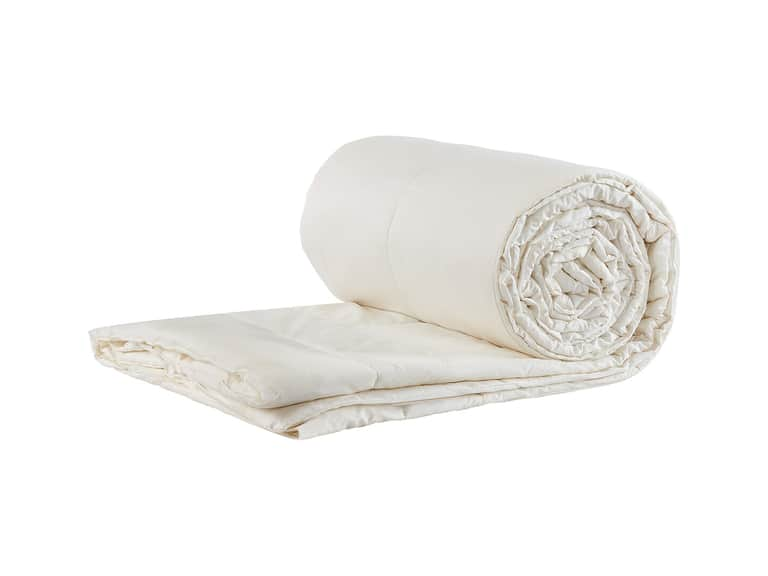
Sleep and Beyond myComforter is a wool comforter designed to provide natural insulation and breathable bedding. Its wool fill offers warmth while helping regulate temperature, and the comforter’s construction is intended for regular sleep use. These characteristics make it relevant to people comparing natural-fiber bedding options.
Comforter care depends on the product’s materials and manufacturer instructions; checking the care label helps preserve the fill and construction. A duvet cover can provide a removable protective layer and coordinate with existing sheets. Proper sizing also matters, especially for larger beds, where coverage and drape affect everyday use.
Wool comforters can be considered alongside other bedroom essentials, including pillows, sheets, duvet covers, and organic mattresses. Comparing fiber content, certifications, dimensions, and care guidance helps clarify how each item fits a bedding setup. The Sleep and Beyond myComforter offers an example of wool-filled bedding for sleepers seeking natural insulation.
 Bedding