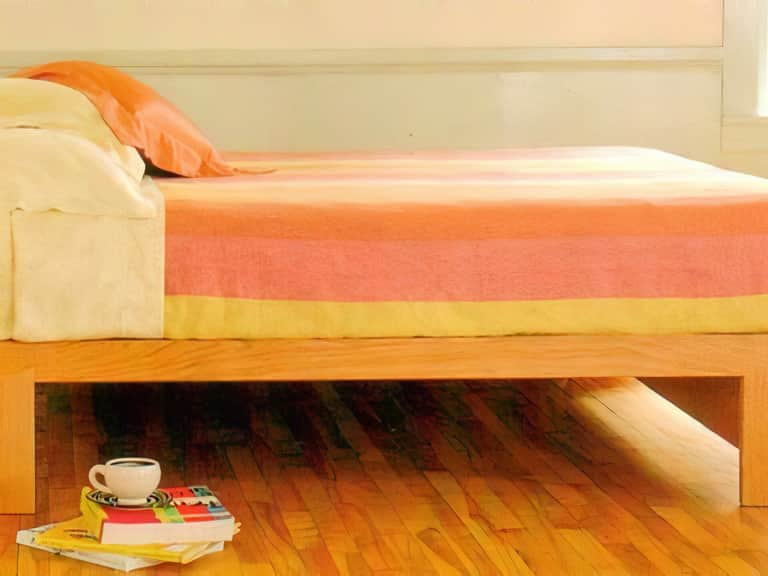
Mattress support and bedroom planning
Weight Capacity and Foundation Compatibility for Natural Latex Mattresses
A natural latex mattress rests on more than a frame: it depends on a chain of supports working together. Understanding the load limits of the mattress and foundation, and how their construction fits, can help preserve a level sleep surface and avoid preventable damage.
Lift a mattress and its apparent simplicity gives way to a small landscape of materials. A natural latex mattress may contain one or more resilient latex layers, a fabric cover, and sometimes additional comfort or support components. Beneath it, a foundation or bed frame carries the load toward the floor. Every part has a job, and every part may have different limits.
That is why “How much weight can this mattress hold?” rarely has a single universal answer. A manufacturer’s guidance may describe a limit for one sleeper, the combined weight of sleepers, or the total load on a bed system. A foundation’s rating may apply to the base alone and may not include the mattress. Before assembling a sleep setup, review the specifications for each component separately, then consider how they function together.
This guide explains how to assess natural latex mattress weight capacity, what to look for in mattress foundation support, and how to check compatibility with adjustable beds. It is an informational reference, not a substitute for the instructions supplied with a particular mattress, base, or frame. When specifications are unclear, the relevant manufacturer is the most reliable source for clarification.
What “weight capacity” can mean
Weight capacity is not always defined in the same way across bedding products. One company may state a maximum per sleeper, while another may give a combined limit for everyone using the mattress. A foundation may list a maximum load that includes the mattress and occupants, or it may refer only to the load the foundation itself can support. These distinctions matter: a number without its definition is difficult to apply safely.
When checking a stated limit, look for the exact wording in the product manual, warranty, or technical specifications. Establish whether the figure refers to:
- One person’s body weight or the combined weight of all sleepers.
- The mattress alone, the foundation alone, or the complete bed system.
- A static load, such as people lying still, or typical use that involves sitting, getting in and out, and changing position.
- A maximum load for the entire base or a limit for each side or section.
Do not assume that two products with similar dimensions share the same capacity. Construction, materials, support layout, and intended use can differ. Nor should a general estimate found online override a product’s own documentation. If the manufacturer does not publish a figure, ask rather than extrapolating from another model.
Calculate the load as a system
A practical assessment starts with the weight carried by the support system, not just the people sleeping on the mattress. Include the mattress itself, sleepers, bedding, and any accessories that remain on the bed. For an adjustable bed, account for components that move with the deck, such as the mattress and bedding, while following the base manufacturer’s definition of its rated capacity. Some ratings may treat the deck or mechanism differently, so confirm what is included.
For a simple planning estimate, add the relevant weights together:
- Sleepers: use their combined weight, including anyone who regularly shares the bed.
- Mattress: check the product specification, since latex mattresses can be substantial and weights vary by size and construction.
- Bedding: include blankets, duvets, toppers, and other items that contribute meaningful weight.
- Accessories: consider items routinely placed on the mattress or attached to the moving bed system.
This arithmetic is a planning tool, not a way to establish a safe limit where none is documented. Compare the resulting load with the relevant limits for the mattress, foundation, and frame. If one component has a lower approved capacity than another, the lower limit governs the system. Leave room within stated limits rather than treating a maximum as a target, and contact manufacturers if the rating’s scope is ambiguous.
Also consider how loads are distributed. Two people do not always occupy the mattress evenly; sitting repeatedly on an edge or concentrating weight in one small area places a different demand on the structure than lying across the surface. Product ratings are not permission to use a bed as a platform for activities or loads beyond ordinary intended use.
Why natural latex needs consistent support
Latex is resilient, but resilience is not a substitute for an appropriate foundation. A mattress needs support across the area specified by its maker so that its surface remains even and its materials are not forced to bridge unsupported gaps. A base that flexes excessively, has widely spaced slats, or is damaged can allow sections of the mattress to dip. Over time, uneven support may affect comfort and may also fall outside the mattress warranty’s requirements.
Natural latex products are not all built alike. Some use a single latex core, while others combine several latex layers, different firmnesses, or other materials. Their thickness, weight, and support requirements can vary. A mattress described as latex is not automatically compatible with every platform, box spring, slatted base, or adjustable frame. Check the specific mattress instructions for acceptable foundation types, required support, and any limits on slat spacing or surface design.
Examine the foundation as carefully as the mattress. Look for a level surface, secure joints, intact slats, stable center support where required, and legs or feet that sit firmly on the floor. A base that was adequate when new may have changed after years of use, a move, or exposure to moisture. If slats are cracked, bowed, loose, or missing, correct the problem before placing the mattress on the frame.
Read the foundation’s construction, not just its name
Terms such as “platform,” “foundation,” and “box spring” can describe products with different designs. A traditional box spring may have a flexible internal structure; a modern foundation may be rigid; a platform bed may use a solid deck or a set of slats. Names alone do not establish compatibility. The useful details are the actual construction and the mattress manufacturer’s requirements.
For a slatted base, check the spacing and the dimensions of the slats against the mattress guidance. The gaps should not exceed the stated maximum, and the slats should be firm and well supported. A solid platform can provide broad, even support, but it must also meet the mattress’s ventilation and use instructions. Do not add a board, extra layer, or improvised support without checking whether the mattress maker permits it; changes can affect airflow, stability, or warranty coverage.
Some platform beds are designed with a center-reinforced structure for larger sizes. For example, the [Maple Corner Woodworks HarvestMoon Dovetail Bed](/products/maple-corner-woodworks-harvestmoon-dovetail-bed-512) is described as using ten interlocking slats and a reinforced center support for king and California king sizes. Those details illustrate features worth examining in any frame, but they do not establish compatibility with every latex mattress or confirm a universal weight rating. Verify the frame’s current specifications alongside the mattress requirements.
For larger beds in particular, ask how the center of the frame is supported and how the load travels to the floor. The presence of a central rail is not, by itself, proof of adequate capacity; its connections, materials, and supporting structure matter too. Follow the frame maker’s assembly instructions and do not omit components because the assembled frame appears stable without them.
Adjustable bed compatibility
An adjustable base changes the geometry of the support surface. Its deck bends at designated joints as the head or foot rises, while the mattress must flex with that movement without slipping, buckling, or being damaged. A natural latex mattress may be compatible with some adjustable beds, but compatibility must be confirmed for the particular mattress and base. Do not infer approval simply because a mattress feels flexible when handled.
Check both sets of instructions. The mattress manufacturer should state whether the mattress can be used on an adjustable base and whether there are restrictions on thickness, construction, or movement. The adjustable-base manual should identify compatible mattress types, size requirements, maximum load, and any limits for each section. If one manufacturer’s guidance conflicts with the other’s—or says nothing—ask both parties before use.
For a split adjustable bed, distinguish between the size of the overall sleeping area and the mattresses that move independently. A split king, for instance, commonly uses two Twin XL mattresses, but product dimensions and configurations can vary. Confirm the exact mattress measurements, base dimensions, and bedding setup. A sheet set intended for a split arrangement, such as one with two fitted mattress pockets, is a separate fit question from structural compatibility; fitted-sheet specifications cannot establish that the mattress or base is suitable for one another.
When an adjustable base is operating, bedding and accessories should not obstruct joints or moving parts. Keep cords, objects, and loose materials clear of mechanisms as directed in the manual. Observe the first few movements after installation and stop if the mattress shifts unexpectedly, catches, or appears to bend in a way the instructions do not allow.
A step-by-step compatibility check
Before placing a natural latex mattress on a new or existing support system, work through a short inspection. This sequence helps surface missing information before it becomes a comfort or safety problem.
- Identify the exact products. Record the mattress model and size, the foundation or bed-frame model, and whether the setup is adjustable.
- Find the manuals. Use the manufacturer’s current instructions rather than relying on a product name or a general size chart.
- Clarify capacity terms. Determine what each stated weight limit covers and whether it applies to individual sleepers, combined occupants, or the full system.
- Estimate the total load. Include sleepers, mattress, bedding, and relevant accessories according to the base maker’s rating definition.
- Check support specifications. Confirm accepted foundation types, slat spacing, center support, and any required platform conditions.
- Inspect condition and assembly. Look for damage, loose fittings, an uneven floor, missing parts, or signs of sagging.
- Confirm adjustable-base approval. Check the mattress and base documentation independently, including any restrictions on movement or size.
- Ask about uncertainty. If a specification is absent or unclear, contact the relevant manufacturer and keep the response for future reference.
Warning signs and maintenance
A level mattress surface depends on a stable system underneath it. Visible dips, a frame that rocks, new creaking, a slat that has shifted, or a center rail that has come loose are reasons to inspect the support promptly. A mattress that slides during adjustment or appears to fold unevenly also merits a pause and a review of the manuals. These signs do not identify a single cause; the mattress, base, assembly, floor, or load distribution may all be relevant.
Follow the mattress maker’s instructions for rotation or other maintenance, if any. Do not assume a mattress should be flipped; many layered designs are intended for use on one side. Check the frame and foundation periodically, particularly after moving the bed or changing its configuration. Tighten or replace parts only as the manufacturer directs, and avoid exceeding a stated capacity to test whether the system can cope.
Keep records of model numbers, measurements, and support requirements. This simple habit can be useful when replacing a base, rearranging a room, or asking about warranty terms. It also helps prevent a common mismatch: buying a mattress by size alone, then discovering that its depth, construction, weight, or base requirements differ from the old setup.
Common assumptions to question
- “King-size means higher capacity.” Mattress size describes dimensions, not a guaranteed load rating. Confirm capacity for the actual product and its support system.
- “A sturdy-looking frame is enough.” Appearance cannot confirm load limits, slat spacing, or compatibility. Use documented specifications.
- “Latex works on any base.” Latex mattresses vary, and their manufacturers may set specific support requirements.
- “The foundation’s limit includes everything.” Ratings differ in scope. Find out whether the stated figure includes the mattress and occupants.
- “If it fits, it is compatible.” Matching dimensions do not prove that a mattress can flex properly on an adjustable bed or receive sufficient support on a frame.
A sound foundation for a better-informed choice
Choosing a support system for a natural latex mattress is an exercise in matching specifications, not guesswork. Treat the mattress, foundation, frame, and—where relevant—adjustable mechanism as parts of one system, while remembering that each may have its own weight limit and conditions of use. Add the loads that the applicable rating covers, examine the support structure, and seek confirmation when instructions leave room for interpretation.
The central question is not simply whether a frame looks strong enough. It is whether the mattress maker approves the support type, whether the foundation can carry the defined load, and whether the complete assembly is level, intact, and correctly built. With those checks in place, a bed’s hidden architecture can do its quiet work: supporting the mattress evenly through the night and moving safely when the design calls for it.
Frequently asked questions
Is there one standard weight limit for natural latex mattresses?
No. Limits and definitions vary by manufacturer and model. Consult the mattress documentation and distinguish a per-sleeper limit from a combined or system-wide rating.
Should I include the mattress when calculating foundation capacity?
Include it if the foundation’s rating covers the complete load. First confirm the rating’s wording; some specifications describe the base alone, while others refer to a loaded system. Include sleepers and the bedding or accessories relevant to that rating as well.
Can I put a latex mattress on an adjustable bed?
Only when the mattress and adjustable-base manufacturers confirm compatibility. Check both manuals for load limits, mattress construction or size restrictions, and operating instructions.
Can a platform bed support a natural latex mattress?
Some platform beds may be suitable, but the word “platform” does not guarantee compatibility. Compare the frame’s construction and slat spacing with the mattress manufacturer’s requirements, and confirm the frame’s weight capacity.